
Gayle von Keyserling
Free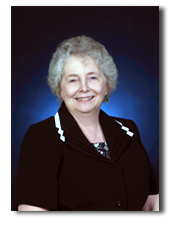
What are your earliest memories of books and reading?
I can remember sitting on a little footstool beside my great grandmother as she read to me. We always had to sit at her chair by her special lamp. I didn’t understand until much later in life that her limited vision necessitated this.
Did you have any favorite authors, books or characters? What did you like about them?
As a small child I loved hearing Little Black Sambo (His grandmother made his clothes too; plus, the tigers eventually turned into butter to put on Sambo’s pancakes (one of my favorite foods as a child) and The Little Engine That Could (Even though he was little, he didn’t give up.) As I grew I seemed to connect with books in series: The Sugar Creek Gang, Nancy Drew, Trixie Belden, Little House on the Prairie. Heidi was another favorite. My dad read the dictionary for pleasure (He always won at Scrabble.) and mother always had a paperback somewhere close.
Did your childhood experiences with books influence you in your teaching, your parenting or both? If so, how?
Yes. I always read to my children. When they were little, the treat at the grocery store was a Little Golden Book not a snack item. Long before DVD players for cars, the entertainment on trips was Mom reading while Dad drove. We went from many little books to the classics: Black Stallion, Call of the Wild, Treasure Island, The Hobbit, (Can you tell I had 3 boys? When their little sister came along many years later, we read Golden Books until she fell asleep and then switched back to the “boy books. :>) When we took a car trip across the US when our oldest graduated from high school, I had only brought along the AAA Travel Guides. We hadn’t been on the road an hour when one of the boys asked what I had brought along to read on the trip. Whoops! We had to make a stop at a drugstore in the next town in order to get what they deemed “appropriate” reading material. To this day, I refer to The Little Engine That Could in my adult education classes (Adult Basic Education, Family Literacy, GED Prep).
What about early educators?
None of my K-12 teachers come to mind.
Were there individuals who had a lasting impact? Would you acknowledge them here?
My grandmothers. My great grandmother taught my grandmother in a one room schoolhouse. I was fascinated by this information. My grandmother also became a teacher. For me, I think this is probably where the seed to teach was planted.
Did your process of becoming a skilled reader inform your own teaching in some way? Could that process have been better or more fun, somehow?
I don’t remember learning how to read. It seemed to happen quite naturally and provided me with much enjoyment. Books were always present in our home. We didn’t own a television until I was 12.
Do you think feelings about their early experiences with reading are the reason some adults come back for basic reading help later in life?
Sometimes, other times necessity “forces” the individual to look for help be it an employment issue or the need to help a child.
Have there been books, authors or characters who have had a profound effect on you as a person (historically and/or currently)?
Three books stand out for me: The Little Engine That Could – the power of a positive attitude (Waddy Piper), Angel Unaware – the impact one person’s life can have (Dale Evans), Step Out on Nothing – the impact of words on an individual (Byron Pitts). I read Angel Unaware when I was in 7th grade and Step Out on Nothing in 2010.
How can educators be effective in a speed-driven, entertainment- and information-saturated culture?
They must believe in what they are doing. Students respond to the caring teacher. I’ve had many an adult learner tell me “the teacher didn’t care if I got it or not.”
What role can books play?
A fondness for books must be genuine.
What do books offer us that we can’t get from other media?
We can no longer say books can take one to places one can’t go as much of today’s multi- media does that. However, books also provide an opportunity for quiet amidst all off the hustle and bustle of today’s world.
How do you convince an adult, who may not be a reader and who may be set in his or her ways, that books are worthwhile?
Start small, share quotes (magazines, newspapers, books), find the student’s interest (recipes, health, hunting, etc.)
Are reading aloud and wide reading valuable for adults and especially for those with young children?
Yes. One night as an ice breaker in my ABE/GED class, I asked my adult learners what was their favorite book as a child. Not one person could remember being read to as a child. This was an eye opener for me & the beginning of the quest for a family literacy program in our county. If so, how do you encourage this? Reading to one’s child is an opportunity to put aside everything else and enjoy time with a child. Its provides “snuggle time” as well as an opportunity to dialogue about all types of things (ex. – Would you have opened the door for the big, bad wolf? – safety, neighborhood issues, etc.) For the English language student or low level reader, picture books afford this opportunity. This is a “safe” place for the adult to begin as no one questions what level the adult is able to read, but rather others see an adult reading to a child.
What kinds of things do you do or are you willing to do to motivate your students? Please share any ideas you’d like to have others consider and/or emulate.
In my family literacy class, I use children’s literature to address parenting issues, to help teach English as a second language, to encourage parents to read to their children. Parents are asked to keep weekly reading logs of time spent reading to their children – not because it’s a class requirement, but because it will benefit the child’s learning. Prizes are given for most logs returned in a given time period. Depending on the budget, the prize might be a “freebie” from a conference or a gift card to the local gas station. We also take a field trip to the local library. It’s always humbling to see the expressions on some faces when folks find out the public library is free!
How can educators promote literacy skills (reading, writing, speaking and listening) for those who may have lost confidence in their literacy abilities?
As an adult educator, I must first help my students feel comfortable in the classroom. In family literacy, I’ll ask students why they think The Little Engine That Could is my favorite children’s story. Someone always tells me “because the little train didn’t give up.” I use this as a catalyst to encourage my students as they begin this new journey toward improved literacy for themselves and their children. And yes, sometimes, I need to remind them that the little engine kept on trying and so should they. The little blue engine didn’t focus on the obstacle, but rather on the goal. In my ABE/GED class I have used excerpts from Byron Pitts’ book, Step Out on Nothing, to illustrate what can happen when someone believes in and encourages an individual. If I could recommend ” a should read” to educators, it would be Step Out on Nothing.
Personal summary? What is the most challenging aspect of working with adult learners? share any memorable moments from your experience with students… when there was an affirmative reading connection made and/or when you saw your classroom efforts translate into solid progress for a learner.
Unlike the child in the K-12 class, adults have many responsibilities. Life sometimes gets in the way of coming to class. Many adult learners enter the classroom with very low self-esteem. Others have never let anyone know their educational weaknesses. After crossing the first hurdle of coming to class, the next hurdle is building trust. I remember one young woman in particular who simply gave up any hope of obtaining her GED (even though she had passed several of the GED subtests) & simply quit coming to class. One day I saw her at another venue and asked if there was a problem. Her reply was, “The problem is you think I can and I know I can’t.” That old self-esteem issue had again reared its ugly head. With much encouragement, she agreed to return to class for “a little while.” Not only did she earn her GED, she went on to become an EMT and now works in the local hospital. Her story went from “I can’t” to “I’ll try” and to a successful “I did!”
Gayle von Keyserling is an adult education and family literacy instructor in rural Fluvanna, Virginia. She was recognized in 2010 as an outstanding family literacy educator by Toyota and the National Center for Family Literacy. Her program, Families Learning Together, is a recent recipient of a grant from the Barbara Bush Foundation.