
Julie Dauksys
Free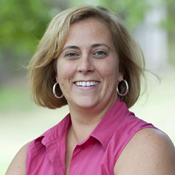
HAPPY: What are your earliest memories of books and reading? Did you have any favorite authors, books or characters? What did you like about them?
J.D. My earliest memories are of my older brothers reading to me. We had lots of books around the house. My oldest brother would always read “The Night Before Christmas” to me on Christmas Eve. My younger brother worked at a bookstore during college and I would visit and sit and read books the whole time I was there. As I got older I was a fan of Laura Ingalls Wilder’s Little House series. I liked how they told about life long ago and all the daily chores the children and mother had to do. I also remember enjoying Ramona the Pest because she reminded me of a friend I had as a young child…always in trouble!
HAPPY: Did your childhood experiences with books influence you in your teaching, your parenting or both? If so, how?
J.D. ABSOLUTELY!!!! I have shared my favorites with children in the classroom, plus found new favorites to add to my own collection. As a parent we read to our son every day…sometimes multiple times. He has always been interested in books. He is now really interested in nonfiction, because he has experiences he can relate to the stories.
HAPPY: What about early educators? Were there individuals who had a lasting impact? Would you acknowledge them here?
J.D. There were many teachers that made an impact on me regarding reading. Mrs. Brown, my third grade teacher, allowed us to choose what books we wanted to read for reading groups. Mrs. Williams, my sixth grade teacher, did book talks for our class and often I would read those she featured. Mrs. Leatherman, the librarian at my middle school, introduced me to many great titles and authors such as Madeline L’Engle and Roald Dahl. I had a wonderful professor at Longwood College named Priscilla Ord who really made the biggest and most lasting impact, as her love for children’s literature was infectious and one of the contributing reasons I decided to pursue a master’s in reading education.
HAPPY: Did your process of becoming a skilled reader inform your own teaching in some way? Could that process have been better or more fun, somehow?
J.D. I think my experiences as a student did influence my own teaching, especially when I taught fourth and fifth grade. I remember the grand conversations we would have about books, and the journaling activities we did, and I did do those same things in my classroom. The comprehension activities we did helped me focus on main ideas and details, plot summaries, and conflict resolution, and these same activities help my own students stretch their thinking.
HAPPY: Have there been books, authors or characters who have had a profound effect on you as a person (historically and/or currently)?
J.D. YES! As a child I read all the Laura Ingalls Wilder books and fell in love with the pioneer spirit and way of life. Laura and Mary were role models for me…the spirited nature and the graciousness of their characters did influence me to be like them. In later years I grew to enjoy English literature, specifically Jane Austen. The details of the time period in which Jane Austen wrote are so vivid and the relationships she describes so detailed you learn a lot about people and their actions and expectations. I also enjoyed reading the legends of King Arthur, which led me to have an interest in other legends and folklore, especially that of Virginia.
HAPPY: How can educators be effective in a speed-driven, entertainment- and information-saturated culture? What role can books play? What do books offer us that we can’t get from other media?
J.D. Books can play a leading role far superior to that of media and electronics. There is nothing like having a good book to read, to take time from your schedule to spend time reading. For some it provides an escape, for some it’s therapy, and for some it’s realizing that other people deal with similar situations as they do. I think educators can be most effective in showing excitement and enthusiasm for reading by introducing students to a wide variety of books through book talks. This allows teachers to provide hooks for kids to gain knowledge about other books, authors, series, etc. I like to encourage kids to keep a list or journal about what they want to read next. Teachers can use picture books to teach more than just topics specific to their instruction in early grades. They can use them to teach comprehension strategies or focus on writing craft. Teachers should carve out time daily for sustained silent reading so that students can have the time to decompress and learn to sustain longer time periods for reading. Teachers could also compete in this media age by looking for media and websites that provide books on line or listen to books on CD in the classroom. There are many high quality media sites now where students can interact with many different texts. l
HAPPY: Are reading aloud and wide reading valuable for today’s learning environment? If so, how do we incorporate this, given all the demands on educators today?
J.D. I definitely think that reading aloud has a huge role in education, even at the middle and high school levels. Students need to hear good readers read a variety of texts so that they can use that as a model for their own reading. Reading picture books aloud can help teachers focus on specific content, comprehension strategies, or writer’s craft. Teachers need to guard this type of instruction as it is critical to exposing students to such a wide variety of texts, authors, and engagement in reading. This can be incorporated through using books in focus or mini lessons where teachers can use all or part of a text to highlight a topic, strategy or craft.
HAPPY: What kinds of things do you do or are you willing to do to motivate your students? Please share any ideas you’d like to have others consider and/or emulate.
J.D. There are many things I’ve done to engage students with text and motivate my students to read. First and foremost, I always plan my classroom environment to make kids want to stretch out and read– lamps, cozy chairs and sofas, beanbags, pillows, etc. all entice kids to want to just sit down and read. Other activities and events I’ve planned are:
- Book talks: Visiting classrooms and reading excerpts of new releases and old favorites to hook student interest
- Reading Nights: Events in the evening at the elementary school to get kids and parents to enjoy reading together.
- Read-In: Another evening event where students come in pajamas and read for chunks of time. In between reading there may be a movement activity, snack, or special guest reader.
- Author Visits: Inviting local/national authors to visit the school to share their craft of writing and their books.
- Open Mike Night: Event at the local bookstore where students had an “open mike” to either read a poem, selection, or their own writing.
- AR/Book It!/etc.: These are packaged programs that have been used at the schools where I’ve taught. They have received some critical press over the years, but they do encourage students to read, which is the whole point.
- Probably the most fun thing I’ve ever done to encourage reading was American Reading Idol, based on the TV show. Instead of singing, students would practice a piece to polish their fluency in reading. We practiced a variety of poems and short pieces in the classroom with the three famous judges-Simon, Paula, and Randy (I put their pictures on sticks.) The judges would give them feedback based on their rate, expression, or prosody. The students would perfect a piece, and then we would have a performance for their classes. This was great fun for everyone, but especially the readers!
HAPPY: How can educators promote literacy skills (reading, writing, speaking and listening) across the curriculum and not just in language arts classrooms?
J.D. Reading, writing, speaking and listening are the basic literacy and communication skills written about in research for years. At the elementary level it is easier for teachers to use books across the curriculum because they teach all content areas. They can find picture books and articles that support content area topics, such as social studies, science and math. Teachers can use these across the curriculum with ease. At the elementary school where I taught last the PE teacher, Carol Beazley, approached me one day and said “how can I help support reading in PE?” I almost fell over! After a discussion about fluency she created a movement program that included letter/sound/sight word recognition for grades K-5. It really helped build fluency, but also the awareness that reading is everywhere, not just in language arts. The music teacher, Louis Hembrick, followed with a project for second grade readers where they had listening centers in the classrooms with the music/words they were learning for their musical. Instead of just learning by memory, the students actually practiced with the lyrics and parts.
At the middle school where I teach now there is a push for content area literacy through a grant-funded program that incorporates learning strategies and routines (graphic organizers) across all content areas, including elective and resource classrooms. Students know in all classes reading, writing, speaking and listening are the norm. With a greater focus this year on writing, many teachers at this level have turned to picture books and real world texts to support their instruction, pulling in paraphrasing and inference strategies as appropriate. This has provided the school with a common language that permeates our culture. Students are more consistent and know expectations. This common language is in all content areas, so it really is a school-wide literacy initiative.
HAPPY: Personal summary: share any memorable moments from your experience with students… when there was an affirmative reading connection made, when a child grasped something new through literature or through writing… or went from being uninterested to being a reader by choice
J.D. Just yesterday I ran into a student I taught seven years ago as a second grade struggling reader. When I run into older students like this I always visit for a few minutes and then ask “so do you still read?” And she responded “I read all the time!” She went on to tell me about a new vampire series she was hooked on and her “book talk” was so interesting I had to borrow paper and pen to write the title and author. She reflected on her experiences as an early reader and the classes she had with me and how what she learned helped her in middle school and now in high school. I really feel like she got it! Not only the importance of how to read, but actually loving books and loving time to read. She is definitely a reader of choice and I am so thrilled she will be a life-long reader.
Julie Dauksys is the reading coach at Liberty Middle School in Hanover, Virginia. She is completing her doctorate in reading at the University of Virginia. She has been a reading specialist at the elementary level and an adjunct professor of reading, as well as a classroom teacher.